
In her latest lesson, Patricia introduces the conditional mood, used to describe hypothetical situations. Unlike the indicative mood, which refers to definite, certain actions or events, the conditional refers to anything indefinite or uncertain. The French conditional generally corresponds to "would" in English—"would go," "would say," "would run," etc.
Conjugating the conditional is fairly straightforward. You just take the infinitive form of the verb and add the ending -ais, -ais, -ait, -ions, -iez, or -aient (though there are some exceptions to this rule). Let's take the verb parler (to talk) as an example:
je parlerais (I would talk) nous parlerions (we would talk)
tu parlerais (you [sing.] would talk) vous parleriez (you [pl.] would talk)
il/elle parlerait (he/she would talk) ils/elles parleraient (they would talk)
You may have noticed that these endings are the same as those used in the imperfect tense. In fact, you'll often see the conditional paired with the imperfect in si (if) clauses:
Que ferais-tu si tu gagnais à la loterie?
What would you do if you won the lottery?
Si j'avais soigné mon épaule,
If I had taken care of my shoulder,
je lèverais mon bras.
I would raise my arm.
Captions 14-15, Le saviez-vous? - Le mode du conditionnel
Play Caption
(J'avais soigné is actually a pluperfect construction, which Patricia reviews in another video.)
The conditional isn't only found in si clauses. You can also use it to express a request or a wish:
Pardon, excusez-moi,
Sorry, excuse me,
est-ce que vous pourriez m'aider à traverser la rue?
could you help me cross the street?
Caption 22, Cap 24 - Alessandro Di Sarno se met à nu !
Play Caption
Je voudrais juste une rose.
I would just like a rose.
Caption 11, Bande-annonce - La Belle et La Bête
Play Caption
As we discussed in a previous lesson, the conditional can also be used to express uncertainty or to report something you heard from someone else. In this case it's often translated with words like "apparently," "supposedly," "reportedly," etc.:
Le rire serait aussi bénéfique que le sport.
Laughter is apparently as good for you as sports.
Caption 16, Le Journal - Les effets bénéfiques du rire!
Play Caption
In our next lesson, we'll show you how to construct the conditional in the past tense. In the meantime, be sure to check out Patricia's video on the future tense, which has a similar conjugation pattern to the conditional. You wouldn't want to get them confused!

C'est and il/elle est are two common expressions used to describe people or things in French. Though they have the same meaning (he/she/it is), they're not interchangeable. So how do you know when to use which? It all depends on what comes after the verb est (is). Let's look at some examples.
Il est (masculine) and elle est (feminine) are primarily used before an adjective alone, or before an adverb and adjective (such as très intelligent):
Il s'appelle André. Il est très intelligent.
His name is André. He's very smart.
They're also used to describe someone's nationality, religion, or profession:
Elle est japonaise. Elle est bouddhiste. Elle est chimiste.
She is Japanese. She is Buddhist. She is a chemist.
Note the difference between the French and the English in that last sentence. You don't need an indefinite article (un, une) after il/elle est when talking about someone's profession. So you don't say elle est une chimiste, but simply elle est chimiste.
C'est is used in pretty much every other circumstance. You'll find it before a modified noun, such as mon ami:
Il s'appelle André. C'est mon ami. [Not: il est mon ami.]
His name is André. He's my friend.
Or before a disjunctive pronoun (moi, toi, lui, etc.):
Ah, oui, c'est moi. -C'est toi mais c'est vrai!
Oh, yes, it's me. -It's you, but it's true!
Caption 63, Actus Quartier - Fête de quartier Python-Duvernois
Play Caption
L'État, c'est moi.
The State, it is I (or "I am the State").
(attributed to King Louis XIV of France)
C'est can also come before a standalone adjective (such as c'est vrai in the example above), but only when you're making a general statement about a situation. If you're referring to something specific, then you use il/elle est:
Cette histoire n'est pas inventée. Elle est vraie.
This story isn't made-up. It's true.
If you're describing a group of people or things, then you need to use the plural forms of c'est and il/elle est. These are ce sont and ils/elles sont (they are):
Ah, ce sont les fameuses pommes de terre, euh... violettes.
Oh, these are the famous, uh... purple potatoes.
Caption 37, 4 Mains pour 1 Piano - Médaillon de Homard
Play Caption
Ne vous approchez pas des ours. Ils sont très dangereux.
Don't go near the bears. They are very dangerous.
Thanks for reading! Stay tuned for our next lesson and tweet us @yabla or send your topic suggestions to newsletter@yabla.com.

In a recent lesson, we talked about the words bon/bonne and mauvais/mauvaise, which respectively mean "good" and "bad," but can also mean "right" and "wrong" depending on context. It's easy to confuse these with the words bien and mal, which have similar meanings ("well" and "badly/poorly") but different functions.
Bon/bonne and mauvais/mauvaise are adjectives, which means they change according to the number and gender of the noun they modify:
Alors justement je crois que c'est vraiment une très bonne chose...
So, exactly, I think that it's really a very good thing...
Caption 56, Alsace 20 - 100 recettes pour 100 vins
Play Caption
Il y a eu la destruction de la partie de maison existante
There was the destruction of the existing part of the house
qui était en très mauvais état.
that was in very bad shape.
Caption 22, Thomas - Thomas et sa maison
Play Caption
On the other hand, bien and mal are adverbs, which can modify verbs, adjectives, and other adverbs. Unlike adjectives, these never change in French:
...un grand orfèvre parisien que Balzac connaissait bien.
who was a great Parisian goldsmith whom Balzac knew well.
Caption 28, Exposition - Balzac, architecte d'intérieurs
Play Caption
Il paraît que les voyages en train finissent mal en général
It seems that train rides generally end badly
Caption 54, Grand Corps Malade - Les Voyages en train
Play Caption
Just as it's ungrammatical to say "whom Balzac knew good" and "train rides generally end bad" in English, in French you can't say que Balzac connaissait bon or les voyages en train finissent mauvais. You have to use bien/mal.
Bien and mal can also function as nouns. In philosophical terms, they refer to "good" and "evil":
Quelle est la différence entre le bien et le mal?
What is the difference between good and evil?
But they have more down-to-earth meanings as well. For instance, the plural les biens means "goods," as in commodities or possessions. And mal can also refer to illness or harm, as in the expressions avoir mal and faire mal:
J'ai mal à l'oreille.
I have an earache.
Ne me fais pas mal!
Don't hurt me!
In everyday speech, bon and bien are also used as interjections, in which case they're more or less interchangeable. They both correspond to the English interjection "well" in this context:
Eh bien, j'espère que vous avez passé un bon moment, ici, sur Arles.
Well, I hope you had a good time here, in Arles.
Caption 21, Arles - Un Petit Tour d'Arles
Play Caption
Bon, il y a des raisons personnelles évidemment qui jouent.
Well, obviously there are personal reasons that come into play.
Caption 17, Alphabétisation - des filles au Sénégal
Play Caption
It's sometimes hard to tell the difference between good and bad, but at least now you know the difference between bon, mauvais, bien, and mal!
Stay tuned for our next lesson and tweet us @yabla or send your topic suggestions to newsletter@yabla.com.

In this lesson, we're going to discuss a somewhat tricky aspect of French color words. Like the vast majority of adjectives, most French color words agree in gender (masculine or feminine) and number (singular or plural) with the noun they modify. Let's take the adjective noir (black) as an example:
Ils peuvent être noirs.
It can be black.
Caption 11, Le saviez-vous? - Le vocabulaire de la tête
Play Caption
Ensuite vous avez mon écharpe noire, une simple étole.
Then you have my black scarf, a simple wrap.
Caption 9, Fanny parle des saisons - S'habiller en hiver
Play Caption
In the first sentence, noir modifies the masculine plural noun cheveux ("hair" is always plural in French), so it takes the masculine plural ending -s (noirs). In the second sentence, noir modifies the feminine singular noun écharpe, so it takes the feminine singular ending -e (noire).
However, certain color adjectives are invariable—that is, they never change regardless of the gender and number of the noun. All of these adjectives are derived from nouns. Take orange for example. As in English, in French orange refers to both the color and the fruit (une orange). Though you can certainly have de multiples oranges (multiple oranges), the adjective form of the word never changes, even in the plural:
J'ai acheté des chaussures orange.
I bought orange shoes.
On the other hand, rouge (red) isn't invariable (since it's not derived from a noun), so it does change in the plural:
Tu as acheté des chaussures rouges.
You bought red shoes.
Another common color adjective that never changes is marron. Un marron is a chestnut, but when used as an adjective, it just means "brown":
Regardez ces chiens. Ils sont marron?
Look at these dogs. Are they brown?
Caption 52, Leçons avec Lionel - Couleurs
Play Caption
The other word for brown, brun, is variable. In this example, it modifies the feminine plural noun feuilles (leaves):
De tas de feuilles à moitié mortes...
Lots of half-dead leaves...
Un jour vertes, un jour brunes
One day green, one day brown
Captions 9-11, Stromae - Bienvenue chez moi
Play Caption
There's another word for "chestnut" too! It's une châtaigne. The related adjective châtain is variable and is often used to describe hair color:
Ils peuvent être châtains.
It can be chestnut-colored.
Châtain, c'est marron.
"Chestnut" is brown.
Captions 12-13, Le saviez-vous? - Le vocabulaire de la tête
Play Caption
Some other invariable color adjectives are: abricot (apricot), ardoise (slate), argent (silver), azur (azure), brique (brick), bronze (bronze), café (coffee), caramel (caramel), champagne (champagne), chocolat (chocolate).
There's one more instance of invariability you should be aware of when dealing with color words. When you use more than one adjective to designate a single color (like "light blue," "dark green," etc.), neither of the adjectives changes according to the noun it modifies. For example:
Il a les yeux bleu clair et les cheveux brun foncé.
He has light blue eyes and dark brown hair.
But:
Il a les yeux bleus et les cheveux bruns.
He has blue eyes and brown hair.
As you may have noticed, like many other adjectives, color adjectives always follow the noun in French. See our previous lesson for more information on that. And for a good introduction to colors in French, check out Lionel's video on the subject.
Thanks for reading! Stay tuned and tweet us @yabla or send your topic suggestions to newsletter@yabla.com.

In a recent video, Lionel samples some beer at a local market in the town of Toul. In classic Lionel fashion, he delivers a witty pun:
Quand on boit de la bière Coin Coin
When you drink "Coin Coin" [Quack Quack] beer,
il faut vivre dans une pièce sans coins.
you need to live in a room without corners.
Captions 36-37, Lionel - Les bières artisanales Coin Coin
Play Caption
The name of the beer is derived from the onomatopoeic expression coin coin, or "quack quack," as in the sound a duck makes. When not repeated, the word coin has several meanings. As Lionel demonstrates, un coin usually means "a corner." He's talking specifically about the corner of a room, but un coin can also be a street corner:
Au coin de la rue Fabre et de la rue Laurier.
At the corner of Rue Fabre [Fabre Street] and Rue Laurier [Laurier Street].
Caption 39, Canadian Chocolate Seller - Chocolats
Play Caption
The other word for "corner" in French is angle (which literally means "angle," as you may have guessed). So you could just as easily say l'angle de la pièce (the corner of the room) or l'angle de la rue (the street corner).
Sometimes, un coin can refer not simply to a street corner, but to a broader area of a town or city:
De l'extérieur, on dit que c'est un coin... un quartier chaud.
Outsiders say that this is an area... a rough neighborhood.
Caption 29, Actus Quartier - Fête de quartier Python-Duvernois
Play Caption
Or it can have a more general locational meaning, like "spot" or "place":
J'ai trouvé un coin sympa au bord de l'eau.
I found a nice spot on the waterfront.
There's also the adjectival phrase du coin, which refers to all things local:
Pas de polémique: qu'ils soient du coin ou qu'ils viennent de loin...
No argument: whether they're from around here or from far away...
Caption 14, Le Journal - Un automne bien chaud
Play Caption
Nous sommes allés au bistrot du coin.
We went to the local bistro.
Coin is a false cognate of the English word "coin." The word for "coin" is pièce, which also means "room," as in Lionel's example above. Try not to get them confused!
C'est la pièce de dix euros, euh, qui représente la région.
It's the ten-euro coin, uh, that represents the region.
Caption 2, Normandie TV - La pièce de 10 euros bas-normande
Play Caption
You can find many expressions featuring coin on this page. Keep them dans un coin de la tête (at the back of your mind) for whenever you speak French!
Tweet us @yabla or send your topic suggestions to newsletter@yabla.com.

We all know that when you're angry about something, it's better to talk about your emotions than to keep them pent up inside. If you ever need to vent in French, there are several constructions you can use to express your anger.
Two of these constructions employ the French word for anger, la colère (related to the English word "choleric," meaning "bad-tempered" or "irritable"). As in English, there's a distinction in French between being angry (être en colère) and getting angry (se mettre en colère, literally, "to put oneself in anger"):
J'étais très en colère contre Harold.
I was very angry at Harold.
Caption 28, Le Jour où tout a basculé - Notre appartement est hanté
Play Caption
Elle devenait nerveuse, elle se mettait en colère.
She became nervous, she got angry.
Caption 3, Le Jour où tout a basculé - Mon père n'est pas mort
Play Caption
Note the preposition contre in the example above. Whereas in English you can be angry "at" or "with" someone, in French you're angry "against" someone.
If you're really angry about something, you can use the construction fou/folle de (which we discussed in a previous lesson):
Elles sont folles de colère, folles de rage, horripilées.
They are wild with anger, raging mad, incensed.
Captions 52-54, Le saviez-vous? - Les synonymes
Play Caption
Besides expressions with colère, the other main way of describing anger in French is with the adjective fâché(e) (angry) or the reflexive verb se fâcher (to get angry):
Tu es fâché contre Léon?
Are you angry with Leon?
Caption 2, Les zooriginaux - Léa jacta est
Play Caption
Ça va, vieux, te fâche pas!
It's OK, old pal, don't get upset!
Caption 22, Il était une fois... L’Espace - 3. La planète verte
Play Caption
Don't confuse the adjective fâché(e) with the adjective fâcheux/fâcheuse, which has a slightly more subdued meaning. It can mean anything along the lines of "annoying," "unfortunate," "regrettable," or "aggravating":
C'est fâcheux qu'il ne puisse pas venir.
It's unfortunate that he can't come.
We hope there was nothing in this lesson that made you angry! Stay tuned for our next lesson and tweet us @yabla or send your topic suggestions to newsletter@yabla.com.
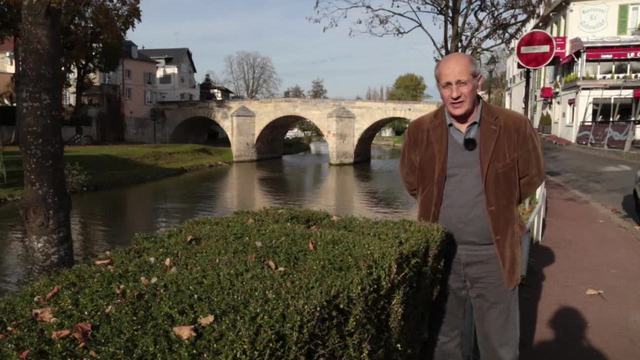
In the latest segment of his tour of L'Isle-Adam, Daniel makes repeated use of the common expression il s'agit de:
Il s'agit tout simplement de la plus grande piscine fluviale de France.
Quite simply, it is the largest river pool in France.
Caption 7, Voyage en France - L'Isle-Adam
Play Caption
Il s'agissait du Tarzan de l'époque, le célèbre Johnny Weissmuller.
It was the Tarzan of the time, the famous Johnny Weissmuller.
Caption 13, Voyage en France - L'Isle-Adam
Play Caption
We could rewrite the above sentences with the expression c'est/c'était: C'est tout simplement la plus grande piscine fluviale..., C'était le Tarzan de l'époque.... But whereas c'est simply means "it is," il s'agit de can also mean "it's about" or "it's a question of." You can use it to specify something you just mentioned:
Il s'agit de voir où sont les abus.
It's a question of seeing where the abuses are.
Caption 13, Le Journal - Contrôle des prix alimentaires
Play Caption
La seule prison qui se trouve dans Paris intra-muros,
The only prison located within Paris itself,
il s'agit de la prison de la Santé.
namely, the Santé [Health] Prison.
Captions 20-21, Voyage dans Paris - Le Treizième arrondissement de Paris
Play Caption
Or you can use it to describe the content of something, for example a movie. Here's a very basic synopsis of the movie Jaws:
Dans ce film, il s'agit des attaques de requin.
This movie is about shark attacks [literally: "In this film, it's about/it's a question of shark attacks"].
S'agir is an impersonal verb, which means it can only be conjugated with the pronoun il. So you couldn't say, Ce film s'agit des attaques de requin, even though that might seem like a more direct translation of the English.
The best way to understand the nuances of il s'agit de is to hear it in context. You can do a Yabla search to find all the videos containing this extremely common expression.
Stay tuned for our next lesson and tweet us @yabla or send your topic suggestions to newsletter@yabla.com!

The adjective malin appears in two recent videos on Yabla, and it has two very different meanings in each. In the last segment of Le Jour où tout a basculé - Notre appartement est hanté, we finally get to the bottom of the spooky occurrences in Harold and Claire's apartment, thanks to Harold's clever investigations:
Mais cette fois-ci, le couple s'est attaqué à un adversaire
But this time, the couple tackled an opponent
plus malin que les autres.
who was more clever than the others.
Caption 34, Le Jour où tout a basculé - Notre appartement est hanté
Play Caption
And in Lionel's visit to Toul Cathedral, we learn about the cathedral's gargoyles and what they represent:
Ici là-bas, on a une représentation,
Here, over there, we have a representation
du diable, du malin, d'un démon.
of the devil, of the evil one, of a demon.
Captions 27-28, Lionel - La Cathédrale de Toul
Play Caption
While malin is most often used as an adjective meaning "smart," it can also have darker undertones, especially when used as a noun. In the second example, the tour guide uses it as a synonym for the devil, but un malin can also just refer to a trickster or a wily person. And don't forget that "smart" can have a negative connotation in English too:
Ça sera peut-être d'avoir l'air malin dans l'interview, hein.
It might be looking like a smart aleck in the interview, you know?
Caption 21, Micro-Trottoirs - Un rêve récurrent?
Play Caption
Bien sûr. Et nous aussi on voudrait du sucre, gros malin!
Of course. And us too, we would like some sugar, wise guy!
Caption 14, Il était une fois... la vie - 14. La bouche et les dents
Play Caption
Ne fais pas le malin avec moi.
Don't get smart with me.
Note that the feminine form of malin isn't maline, but maligne:
Et même, très maligne, ma petite Clémentine!
And even very clever, my little Clémentine!
Caption 51, Manon et Clémentine - Conjugaison du verbe être
Play Caption
You'll also see this -in/-igne ending in the word bénin/bénigne (benign, minor), which is actually an antonym of malin/maligne: une tumeur maligne is a malignant tumor, and une tumeur bénigne is a benign tumor.
Manu le Malin is a famous French hardcore DJ. You can check out some interviews with him on Yabla.
Thanks for reading! Tweet us @yabla or send your topic suggestions to newsletter@yabla.com.

In our last lesson on the difference between the verbs habiter and vivre, we mentioned that habiteris often followed by a preposition such as à or dans, but it doesn't always require one. So if you live in Paris, you could either say j'habite à Paris (I live in Paris) or simply j'habite Paris (I live in Paris). But in this lesson, we'll focus on instances in which the choice of preposition is very important. Take a look at this example:
Je suis né à Paris en France
I was born in Paris, in France,
et j'ai commencé a faire du piano vers l'âge de huit ans.
and I started to play the piano at around eight years of age.
Caption 3, Alex Terrier - Le musicien et son jazz
Play Caption
You'll notice that Alex uses two different prepositions here (à and en) that both translate as "in." So why does he say à Paris but en France? It all has to do with the types of places he's describing. When you're talking about being in a city, you use à:
Je suis né à Paris mais j'habite à Lyon.
I was born in Paris but I live in Lyon.
When you're talking about being in a feminine country (usually ending in e, such as la France), you use en (je suis né en France). But when you're talking about being in a masculine country, you use au, unless the name of the country begins with a vowel, in which case you use en:
Ma famille habite au Botswana et en Angola.
My family lives in Botswana and in Angola.
And for a plural country of either gender, you use aux:
Donc, treize, quatorze jours de vacances aux États-Unis.
So, thirteen, fourteen days of vacation in the United States.
Caption 5, Interviews à Central Park - Différences culturelles
Play Caption
These prepositions are translated as "in" in the above examples, but they can all mean "to" as well:
Aujourd'hui nous sommes à Londres et demain nous irons à Dublin.
We're in London today and we're going to Dublin tomorrow.
When you're talking about coming from a place, the rules are a bit more straightforward. For cities, feminine countries, and masculine countries beginning with a vowel, you use de/d'. For masculine countries beginning with a consonant, you use du. And for plural countries, you use des:
Je viens (I come)... de New York (from New York).
d'Athènes (from Athens).
de Chine (from China).
d'Iran (from Iran).
du Canada (from Canada).
des Pays-Bas (from the Netherlands).
Knowing these prepositions will make it easier to describe where you're from, where you are, and where you're going in French!
Tweet us @yabla or send your topic suggestions to newsletter@yabla.com.

Habiter and vivre both mean "to live" in French, but they're used in slightly different contexts. Habiter is very similar in meaning to its English cognate, "to inhabit": it generally refers to where a person is living. While vivre can also have this meaning, it more often refers to a person's living conditions or general existence. Let's look at some examples to illustrate the difference between these two lively verbs.
It's very common to place a preposition such as à or dans after habiter to describe where you're living:
On habite à Still, on a eu une superbe opportunité.
We live in Still, we had a superb opportunity.
Caption 7, Alsace 20 - Grain de Sel: à l'Anatable à Dinsheim
Play Caption
J'habite dans une maison bleue.
I live in a blue house.
But technically, habiter doesn't require a preposition at all. You could just as well say on habite Still (we live in Still) or j'habite une maison bleue (I live in a blue house). The choice is yours! Here's another example of habiter without a preposition:
De là à habiter ce bout du monde isolé...
From there to inhabiting this isolated end of the world...
Caption 3, Le Journal - L'île de Pâques
Play Caption
Whereas habiter describes the specifics of a person's living situation, vivre is more about la vie en général (life in general). It describes how a person lives, or what their life is like:
Elle a permis à Michel, sinon de faire fortune,
It has allowed Michel, if not to become rich,
du moins de vivre bien, avec sa petite famille...
at least to live well with his small family...
Captions 17-19, Le Journal - L'île de Pâques
Play Caption
...un petit village, qui vit son quotidien de manière tranquille.
...a small village, that lives its daily life in a quiet way.
Captions 5-6, Lionel et Chantal - à Frémestroff
Play Caption
Vivre can also mean "to live through" or "to experience":
Moi je dirais que c'est magique et que ça se raconte pas,
I'd say that it's magical and that it can't be described,
qu'il faut le vivre.
that you have to experience it.
Caption 26, TV Vendée - "Nieul Village de Lumière"
Play Caption
No matter where you're living or how you're living, we hope your French studies are going well!
Tweet us @yabla or send your topic suggestions to newsletter@yabla.com.

There are two ways of saying "finally" in French: finalement and enfin. Though they have the same translation and are often used interchangeably in casual speech, these two words aren't exactly synonymous. There's a subtle difference between them that's illustrated in these two examples:
Le grand jour est enfin arrivé.
The big day finally arrived.
Caption 28, Le Jour où tout a basculé - Nos bébés ont été échangés... - Part 7
Play Caption
Au début... j'étais braquée. J'avais pas envie.
In the beginning... I was dead against it. I didn't want to.
Puis finalement j'ai compris que c'était pour mon bien.
Then finally I understood that it was for my own good.
Captions 6-7, Le Jour où tout a basculé - Nos bébés ont été échangés... - Part 8
Play Caption
When you say that something has finally arrived, you're implying that you've been expecting it to arrive for a while. But if you finally understand that something is for your own good after being dead against it, you're implying that you didn't expect to have this reversal of opinion. This is the fundamental difference between enfin and finalement: while enfin describes a foreseeable outcome, finalement describes an unforeseeable one.
Let's look at another example. If you say to someone, je suis enchanté(e) de vous rencontrer enfin (I'm glad to finally meet you), you're saying that you've been wanting to meet them for a long time. But if you say, je suis enchanté(e) de vous rencontrer finalement, you're giving the impression that you didn't really want to meet the person at first, but now you're happy that you did. Which is to say that you shouldn't use finalement in this case, unless you want to hurt their feelings!
Finalement can also mean "in the end," which also has the sense of something not turning out as expected:
Alors demain, finalement, on ira pas au château.
So tomorrow, in the end, we won't go to the castle.
Caption 55, Le Mans TV - Mon Village - Malicorne
Play Caption
Another way of translating that caption would be, "So tomorrow we won't go to the castle after all."
Enfin is used very often in informal speech as a sort of filler word that can mean anything from "well" to "I mean" to "in any case":
Il y en a eu tant que ça?
Have there been that many?
Oui, enfin, non, euh... quelques-uns, quoi.
Yes, well [or "I mean"], no, uh... a few, you know.
Captions 37-38, Le Jour où tout a basculé - Notre appartement est hanté - Part 2
Play Caption
...où nous sommes au métro Jaurès,
...where we are at the Jaurès subway stop,
enfin, où Paris-Plage
in any case, where "Paris-Plage" [Paris Beach]
a accès à l'eau.
has access to the water.
Captions 2-3, Lionel L - Paris-Plage
Play Caption
Enfin can also come in handy when expressing impatience or frustration:
Mais enfin, relève-toi!
Come on, stand up!
Caption 2, Il était une fois - les Explorateurs - 15. Bruce et les sources du Nil
Play Caption
Cette leçon est enfin terminée! (This lesson is finally over!) Tweet us @yabla or send your topic suggestions to newsletter@yabla.com.

In her latest video series, Patricia talks about the different ways of expressing possession in French. Though she mainly focuses on possessive adjectives (which correspond to "my," "your," "his/her," etc.) and possessive pronouns (which correspond to "mine," "yours," "his/hers," etc.), Patricia also uses another possessive construction throughout the videos. It's the expression à + stressed pronoun (moi, toi, lui, elle, nous, vous, eux, elles), which can be used as an alternative to a possessive pronoun:
Si cette tasse est à moi... je dis: c'est la mienne.
If this cup is mine... I say: it's mine.
Captions 27-30, Le saviez-vous? - Les pronoms possessifs
Play Caption
This expression usually follows the verb être, as in the example above, but you'll also find it in other contexts:
J'ai trouvé une robe à elle dans le grenier.
I found a dress of hers in the attic.
Unlike possessive adjectives and pronouns, which change depending on the gender (masculine or feminine) and number (singular or plural) of the possessed object, this construction corresponds to the gender and number of the possessor:
Et si je veux dire que cette chaussure est à lui...
And if I want to say that this shoe is his...
je vais dire: C'est sa chaussure.
I'm going to say: It's his shoe.
Captions 55-59, Le saviez-vous? - Les adjectifs possessifs
Play Caption
Since chaussure is feminine and singular, the possessive adjective modifying it also needs to be feminine and singular (sa). But sa chaussure can either mean "his shoe" or "her shoe" depending on context. We know that Patricia means "his shoe" here because she says cette chaussure est à lui (this shoe is his). If she had said cette chaussure est à elle (this shoe is hers), then sa chaussure would mean "her shoe."
You'll often find this construction in combination with a possessive adjective. Let's say you're at a dog park and you're telling someone whose dog is whose. If you say c'est mon chien (that's my dog), they'll immediately know that the dog in question belongs to you. But if you say c'est son chien (that's his or her dog), they might not know who you're referring to. You can specify by saying:
C'est son chien à elle. / C'est son chien à lui.
That's her dog. / That's his dog.
The expression c'est à + stressed pronoun also has another meaning that has nothing to do with possession. It's the equivalent of the English expression "it's up to me, you, etc.":
C'est à toi de décider ce que tu veux faire.
It's up to you to decide what you want to do.
Thanks for reading! Tweet us @yabla or send your topic suggestions to newsletter@yabla.com.

The words quelconque (any) and quiconque (anyone) can come in handy when you're talking about something general or non-specific in French. Though they look quite similar, you can easily tell these words apart by focusing on what comes before -conque: qui (who) and quel (what, which). There are a few key differences between these words. While quelconque can refer to both people and things, quiconque only refers to people. And while quiconque functions as a relative or indefinite pronoun, quelconque functions as an adjective:
Elle fouille la maison
She rifles through the house
de fond en comble à la recherche d'un quelconque indice.
from top to bottom in search of any clue.
Caption 19, Le Jour où tout a basculé - Nos bébés ont été échangés...
Play Caption
Mais la petite sirène était incapable de faire du mal à quiconque.
But the little mermaid was incapable of hurting anyone.
Caption 41, Contes de fées - La petite sirène
Play Caption
Quelconque and quiconque are very similar to two other expressions we discussed in a previous lesson, n'importe quel and n'importe qui:
ls la postent dans n'importe quelle boîte aux lettres
They mail it in any mailbox,
en oubliant pas de mettre leur adresse retour...
not forgetting to put their return address...
Captions 12-13, LCM - "Cher Père Noël..."
Play Caption
Et qui l'achète? -Ah, n'importe qui.
And who buys it? -Ah, anyone.
Captions 4-5, Le Journal - La bougie du sapeur
Play Caption
Note that while the quel in n'importe quel changes depending on the gender and number of the noun it modifies (n'importe quelle, n'importe quels, n'importe quelles), the quel in quelconque never changes. However, since quelconque is an adjective, it takes an "s" when modifying a plural noun:
Si vous avez de quelconques questions, n'hésitez pas à nous contacter.
If you have any questions, don't hesitate to contact us.
Quiconque can mean "whoever" or "anyone who" in more formal contexts:
Quiconque arrive en retard ne sera pas autorisé à entrer dans le théâtre.
Anyone who arrives late will not be allowed to enter the theater.
And quelconque is sometimes used as a pejorative meaning "ordinary," "second-rate," or "mediocre":
Ce restaurant est très quelconque.
That restaurant is very mediocre.
Thanks for reading! Tweet us @yabla or send your newsletter topic suggestions to newsletter@yabla.com.

Daniel does a lot of walking in his Voyage en France series, showing us around some of France's most beautiful and historic cities and towns. He also uses several walking-related words during his tours:
Et d'emblée depuis cette promenade...
And right away from this walk...
Caption 5, Voyage en France - Conflans-Sainte-Honorine
Play Caption
In English, "promenade" is a somewhat formal word for a boardwalk or a leisurely stroll. But une promenade is the standard French term for "a walk" or, when you're going somewhere in a vehicle, "a ride" or "drive":
Hier nous avons fait une promenade en voiture.
We went for a drive yesterday.
Its verb form, se promener, means "to take a walk":
Quand on se promène dans le vieux Conflans...
When we take a walk in Old Conflans...
Caption 22, Voyage en France - Conflans-Sainte-Honorine
Play Caption
Daniel also frequently uses the word une balade (not to be confused with une ballade, "a ballad"), which has the same meaning as une promenade:
Pendant votre balade dans le vieux Conflans...
During your walk in Old Conflans...
Caption 28, Voyage en France - Conflans-Sainte-Honorine
Play Caption
Just like une promenade, une balade also has a verb form, se balader:
A se balader avec lui dans les rues de Dakar,
Strolling along the streets of Dakar with him,
on mesure toute la dimension de l'artiste.
one gets a sense of the depths of the artist.
Captions 30-31, Le Journal - Youssou N'Dour
Play Caption
C'est très, très agréable de se balader
It's very, very pleasant to go for a ride
avec ces bateaux sur la mer.
on those boats on the sea.
Captions 33-34, Jean-Marc - La plage
Play Caption
As you may know, marcher is the basic French verb for "to walk." But it's also often used informally to mean "to work," "to function," or "to go well":
Non, c'est juste pour voir si tout marche bien.
No, it's just to see if everything is working well.
Caption 3, Il était une fois: Les découvreurs - 9. Galilée
Play Caption
Elle est chez les seniors. Et ça marche bien.
She's with the seniors. And it's going well.
Caption 43, Actus Quartier - Fête de quartier Python-Duvernois
Play Caption
Just as you can say "that works" to mean "OK" or "sounds good to me," in French you can say ça marche:
Tu veux prendre un café aujourd'hui à quinze heures? -Ça marche!
Do you want to get coffee today at three p.m.? -That works!
Now that you know all the different ways of saying "walk" in French, why not go take one?
Thanks for reading! If you have any questions or comments, feel free to write to us at newsletter@yabla.com or tweet us @yabla.

In one of our newest videos, an interviewer asks people on the street to talk about their most beautiful dreams and most terrifying nightmares. One woman describes a particularly unsettling nightmare:
J'assiste à des accidents où y a des gens qui sont très blessés...
I witness accidents where there are people who are badly injured...
Captions 83-84, Micro-Trottoirs - Rêves et cauchemars
Play Caption
She's not saying that she assists with these accidents (which would be even more unsettling!), but that she witnesses them. The phrase assister à doesn't mean "to assist," but rather "to witness" or "to attend":
Puisqu'un public assiste à une assemblée générale et à une réunion...
Because a crowd attends a general assembly and a meeting...
Caption 8, Lionel L - Nuit Debout - Journée internationale
Play Caption
"To attend" looks a lot like the French verb attendre, but like "to assist" and assister à, these two words are faux amis (false friends)—attendre means "to wait," not "to attend."
But once you take away the à, assister has the same meaning as its English cognate:
Le sous-chef assiste le chef dans la cuisine.
The sous-chef assists the chef in the kitchen.
There are a number of other French verbs meaning "to assist," like aider (to help) and accompagner (to accompany):
J'ai aidé ma grand-mère à nettoyer la maison.
I helped my grandmother clean her house.
Qui connaissent les parents
Who know the parents
et accompagnent les enfants les plus en retard.
and assist the students who are the most behind.
Caption 29, Grand Corps Malade - Education nationale
Play Caption
Thanks for reading! If you have any questions or comments, feel free to write to us at newsletter@yabla.com or tweet us @yabla.

Our new videos this week feature a wealth of vocabulary related to the performing arts. In the first, our newest presenter Mathilde talks about the Comédie-Française, one of France's most iconic state theaters. Though the theater has the word comédie in its name (and was founded by one of France's greatest comic playwrights, Molière), it stages all kinds of theater pieces, both comic and tragic. In fact, the word comédie doesn't only mean "comedy." It can also mean "acting" in general. Likewise, un comédien/une comédienne is not merely "a comedian":
Donc la Comédie-Française aujourd'hui a environ
So the Comédie-Française today has around
soixante comédiens dans sa troupe,
sixty players in its troupe,
parmi les plus célèbres comédiens français.
among the most famous French actors.
Captions 40-41, Mathilde - La Comédie-Française
Play Caption
You can also simply say un acteur/une actrice for "actor/actress." And if you want to specify that you're talking about a comic actor (i.e., a comedian), you can say un/une comique or un/une humoriste.
The phrase jouer la comédie means "to act" or "to be an actor." Sometimes it's just shortened to jouer (which also means "to play"):
Ils jouent aussi pour d'autres théâtres.
They also act for other theater companies.
Caption 43, Mathilde - La Comédie-Française
Play Caption
Don't confuse that expression with faire de la comédie, which means "to make a fuss" or "a scene."
In this tragic tidbit about Molière's final performance, we find two interesting theater-related words:
Molière serait mort en scène
Molière supposedly died onstage
en interprétant le rôle mythique d'Argan
while interpreting the mythic role of Argan
dans une de ses plus célèbres pièces...
in one of his most famous plays...
Captions 36-38, Mathilde - La Comédie-Française
Play Caption
While une scène can refer to a scene in a play, it also refers to the stage on which the play is performed. The word for "play," une pièce, is short for pièce de théâtre (theater piece).
Our second video takes us from the world of theater to the world of film. It documents a Chinese film festival in the town of Richelieu headed by one of France's most famous film directors, Claude Lelouch. The video contains not one but three different words for "director":
...et des metteurs en scène prestigieux d'ailleurs qui ont des prix...
...and eminent film directors, incidentally, who won prizes...
Caption 27, Festival du cinéma chinois - Coup d'envoi à Richelieu
Play Caption
Et pour rendre hommage à ces femmes
And to pay homage to these women
si chères au cœur du cinéaste...
who are so dear to the filmmaker's heart...
Caption 40, Festival du cinéma chinois - Coup d'envoi à Richelieu
Play Caption
...en présence du réalisateur et de son actrice Anouk Aimée.
...in the presence of the director and of its actress Anouk Aimée.
Caption 43, Festival du cinéma chinois - Coup d'envoi à Richelieu
Play Caption
On the other hand, there's only one word for "screenwriter"—scénariste (from scénario, "screenplay" or "script"):
...mais surtout scénariste de bon nombre
...but more importantly screenwriter of a good number
de films signés Lelouch.
of films signed "Lelouch."
Caption 10, Festival du cinéma chinois - Coup d'envoi à Richelieu
Play Caption
Thanks for reading! If you have any questions or comments, feel free to write to us at newsletter@yabla.com or tweet us @yabla.

Did you know that, in French, "good" can also mean "right," and "bad" can also mean "wrong"? This might sound sort of philosophical, but it's really just an issue of translation. Bon/bonne and mauvais/mauvaise are two of the most basic adjectives in French. They usually mean "good" and "bad" respectively, but depending on context, they can also mean "right" and "wrong":
C'est la mauvaise réponse à la question.
That's the wrong answer to the question.
Vous pouvez aussi me donner deux numéros de compte.
You can also give me two account numbers.
Je vous dirai lequel est le bon.
I will tell you which is the right one.
Captions 20-21, Patricia - Pas de crédit dans le monde des clones
Play Caption
When bon/bonne and mauvais/mauvaise mean "right" and "wrong," they're often preceded by a definite article (le, la, les). For example, take a look at the difference between the phrases un bon moment and au (à + le) bon moment:
Eh bien, j'espère que vous
Well, I hope you
avez passé un bon moment, ici, sur Arles...
had a good time here, in Arles...
Caption 21, Arles - Un Petit Tour d'Arles
Play Caption
Tout cet art, c'est de faire en sorte de mettre dans l'eau
All this is an art to ensure that you put in the water
au bon moment, hein...
at the right time, you see...
Caption 8, Ostréiculture - Rencontre avec Gildas Mourier (Morbihan)
Play Caption
Using these adjectives isn't the only way to describe correctness and incorrectness. You can also use the verbal phrases avoir raison (to be right, literally "to have reason") and avoir tort (to be wrong, literally "to have fault"):
Oui, tu as raison.
Yes, you're right.
Je ne suis pas trop dans mon assiette.
I'm not too much in my plate [I feel under the weather].
Caption 26, Manon et Clémentine - Expressions toutes faites
Play Caption
J'ai peut-être eu tort de me fier à lui pour ce projet.
Maybe I was wrong to trust him with this project.
Caption 53, Il était une fois: Les Amériques - 9. Cortés et les Aztèques
Play Caption
In a previous lesson, we mentioned one other way to say "to be wrong"—se tromper:
Donc, tu crois que Colomb se trompe!
So you think that Columbus is wrong!
Caption 6, Il était une fois: les Explorateurs - 10. Amerigo Vespucci
Play Caption
Thanks for reading! If you have any questions or comments, feel free to write to us at newsletter@yabla.com or tweet us @yabla.
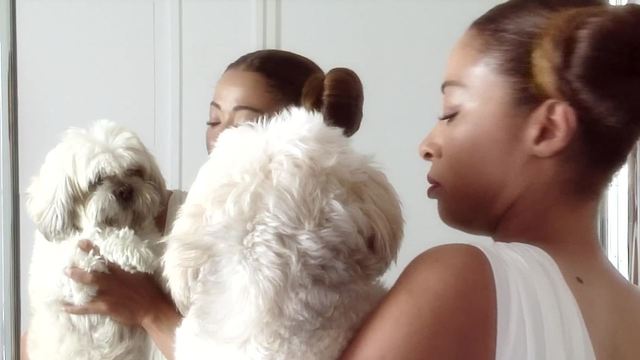
In her new sci-fi series Pas de crédit dans le monde des clones, Patricia imagines a dystopian future in which all credit card companies have merged into one:
Du fait de nombreuses fusions,
Because of many mergers,
il ne reste plus qu'une société anonyme de cartes de crédit.
there remains only one limited liability credit card company.
Caption 15, Patricia - Pas de crédit dans le monde des clones
Play Caption
Du fait de is one of several French expressions that mean "because" (you can learn more about these expressions in our past lesson on the topic). It's also one of many expressions featuring the word fait, which you might recognize as a conjugation of the verb faire (to make, to do). But fait is also a noun meaning "fact"—du fait de literally means "from the fact of." In this lesson, we'll review some other "fact"-based expressions in French.
Patricia uses a similar expression to du fait de earlier on in her video—de ce fait (therefore, literally "from this fact"):
De ce fait, toutes les procédures de paiement
Therefore, all payment procedures
sont réalisées sans argent physique.
are performed without physical money.
Caption 13, Patricia - Pas de crédit dans le monde des clones
Play Caption
Now that you know that fait means "fact," you can probably guess what en fait means. Alessandro uses it when interviewing a flea market vendor:
Vous, c'est une véritable passion
For you, it's a true passion
que vous partagez tous les jours en fait.
that you share every day, in fact.
Caption 6, Cap 24 - Paris : Alessandro fait les Puces!
Play Caption
The vendor responds in the next caption with another fait expression, tout à fait (exactly):
Oui, oui. Tout à fait.
Yes, yes. Exactly.
Caption 7, Cap 24 - Paris : Alessandro fait les Puces!
Play Caption
Don't confuse en fait with au fait, which means "by the way" or "incidentally":
Ah, au fait, j'ai parlé à Vanessa de nos nouveaux voisins.
Oh, by the way, I spoke to Vanessa about our new neighbors.
Caption 22, Le Jour où tout a basculé - Espion dans l'immeuble - Part 8
Play Caption
En fait and au fait are easily confused not only because they look similar, but also because the t is pronounced in both of them. In most other instances of the word fait, the t is silent.
If someone has done a good job on something, you can say, Bien fait! (Well done!) In this case fait isn't a noun but the past participle of the verb faire:
Oui, chef. Bien fait!
Yes, chief. Well done!
Caption 46, Il était une fois... L’Espace - 3. La planète verte
Play Caption
As a noun, fait doesn't only mean "fact." It can also mean "event" or "occurrence" depending on the context:
Cette histoire est inspirée de faits réels.
This story is inspired by real events.
Caption 21, Le Jour où tout a basculé - Espion dans l'immeuble - Part 1
Play Caption
This lesson is now a fait accompli (accomplished fact). Thanks for reading!

 Spanish
 German
 Italian
 Chinese
 English
 English
  Deutsch
 Español
 Français
 Italiano